Dice Connect - Sequence Twist
- 4.9
- Rating
- 100.00K
- Installs
- Free
- Price

 Analysis by App-foxy
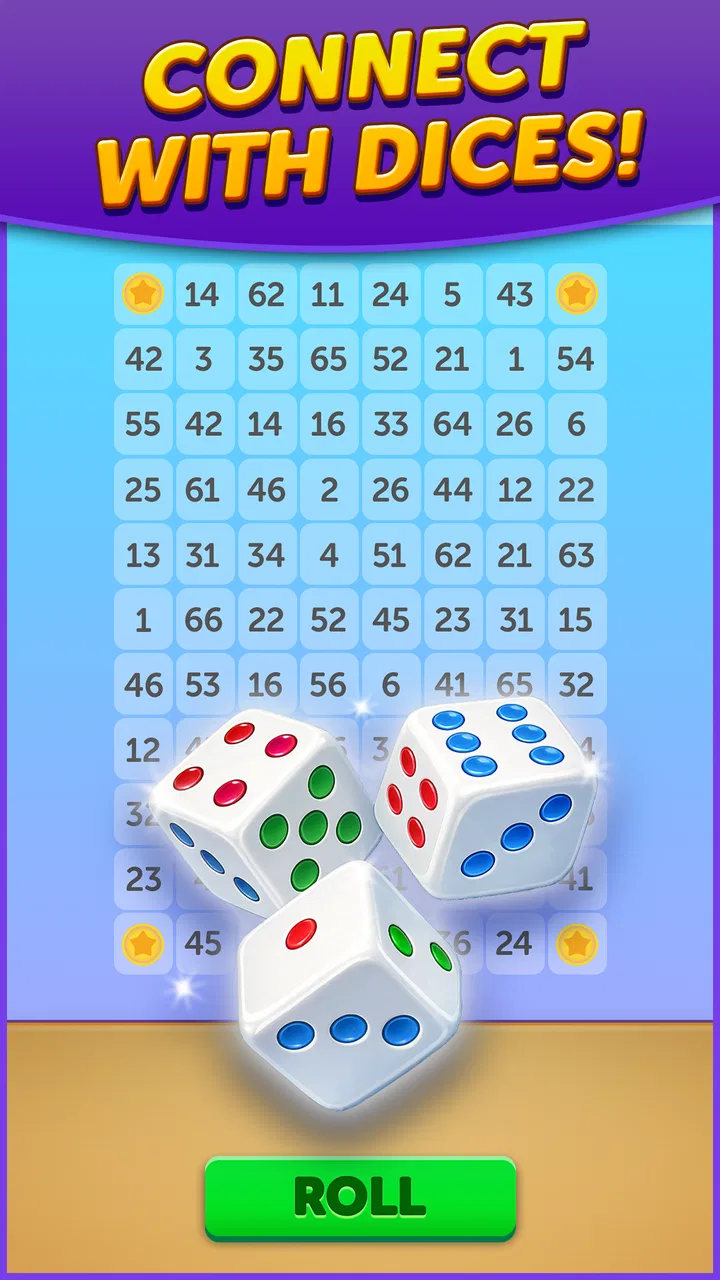
I spent time with Dice Connect - Sequence Twist, a free board game from FunCraft Games that turns dice rolls into a small planning puzzle. The basic idea is easy to understand: roll, place your move, and try to build a connected route before the board works against you. What makes it interesting is the tension between luck and positioning. A good roll helps, but it does not automatically rescue a careless path.
That makes this a useful choice for players who enjoy compact strategy games rather than long, complicated board-game sessions. I can imagine opening it during a short break, playing a few rounds, and putting it away without needing a large time commitment. At the same time, it is not simply a passive dice roller. You still need to think about where each result belongs and whether a tempting move will create trouble later.
How the dice-and-path idea feels in everyday play
The first thing I noticed is how quickly the central loop becomes readable. You are not learning a large collection of cards, characters, or special rules before you can make a meaningful decision. The board, the roll, and the route you are trying to connect stay at the center of the experience. That clarity gives the game an approachable feel for casual players and for anyone who normally avoids heavier strategy titles.
You May Also Like

 Blood Strike: 2.5 Anniversary
Blood Strike’s Loadouts Turn Every Drop Into a Tactical Gamble
A close look at Blood Strike’s custom loadouts: how fast access to signature weapons reshapes its battle royale rhythm, rewards preparation, and narrows the gap between fights.

 Pandora - Music & Podcasts
Pandora’s Music Is Easy to Start, but Harder to Recover
Pandora’s strength is its low-effort path from a seed to a station. Its weak spot is how much confidence it asks you to place in connection, setup, and quiet recovery.

 8 Ball Pool
 Is Built on Rivalries, Rematches, and Routine
A close look at the rivalries, rematches, shared routines, and unanswered safety questions that turn a quick pool match into a persistent mobile community.

 Samsung Music
’s Quiet Strength Is Playing What You Already Own
Its reach comes less from spectacle than from dependable access to a personal library. That simplicity is both the app’s strongest retention engine and its ceiling.

 AccuWeather: Weather Radar
AccuWeather Review: A Quick, Clear Forecast for Everyday Decisions
For everyday plans, the best forecast is the one you can understand quickly. AccuWeather makes rain timing, radar, and local conditions easy to act on, with a few trade-offs.

 Hill Climb Racing
Why Hill Climb Racing Still Turns Crashes Into One More Run
A tiny car, a bumpy hill and one more upgrade: Hill Climb Racing keeps resurfacing because its simple chaos makes every near-miss feel personal.
More From Our News Desk



My preferred way to play is to treat every roll as a choice between immediate progress and future flexibility. A move that extends the route right away can look attractive, but it may also leave awkward gaps or force the next few decisions into a narrow area. I found that the better habit is to pause briefly after each roll and look at the whole shape of the path, not only the most obvious open space.
That small pause is where the game earns its place in the board category. The dice introduce uncertainty, while the connection goal gives that uncertainty a direction. I am not trying to predict an entire match perfectly; I am trying to avoid making the current position worse than it needs to be. This keeps the decisions understandable without making them meaningless.
A realistic use case is a short commute or a waiting room. I would not choose it when I want a deep campaign or a story to disappear into, but I would choose it when I want something more engaging than a completely automatic casual game. The rules are light enough to pick up quickly, and the route-building objective gives each turn a reason to matter.
Why planning matters more than a lucky opening
The most useful mental shift is to stop treating a favorable roll as an instruction. A strong result can still be poorly timed. If it sends the path toward a crowded or inconvenient part of the board, taking it immediately may reduce the options available later. I had better results when I considered whether a move preserved several possible continuations.
This also creates a practical distinction between beginners and more patient players. Someone new may simply place the result wherever it seems to advance the line. After a few sessions, it becomes more natural to examine the next connection and ask whether the current placement leaves a clean follow-up. That is a modest form of forward planning, but it gives the simple rules more depth than the store summary suggests.
Another useful approach is to identify the board areas that are difficult to recover from. When a route enters a tight space, a future roll may have fewer useful destinations. I try to avoid committing to those areas unless the move solves an immediate problem or opens a valuable connection. This does not remove the luck factor, but it makes bad rolls less damaging because I have not spent all my flexibility too early.
For a very young player, the game can also work as a gentle introduction to planning under uncertainty. The age rating is Everyone, and the basic concept is easy to explain without turning the session into a lesson. I would still expect younger players to enjoy the visual act of connecting more than the long-term strategy at first. The game becomes more rewarding as they begin noticing why one placement leaves more choices than another.
Progress, pressure, and the cost of a mistake
The pressure in a dice board game comes from knowing that a harmless-looking decision can become expensive several turns later. I like that kind of pressure when the board remains readable. It gives me a reason to review my position instead of acting on autopilot. The downside is that players who want constant rewards may find the slower, more cautious approach less exciting.
There is also a trade-off between speed and control. Playing quickly keeps the session lively, but rushing makes it easier to close off a useful route. Playing too slowly can make a lightweight game feel heavier than intended. I found that a short planning rhythm works best: check the immediate connection, inspect the next likely continuation, then commit. That is enough thought to improve decisions without turning every roll into a long calculation.
Players wondering whether the game has meaningful replay value should approach it as a decision practice rather than a large content-driven experience. The appeal comes from handling changing rolls and board situations, not from expecting a long progression system or a narrative journey. If you need unlockable characters, a campaign, or a broad collection of modes, this will probably feel limited compared with larger board-game adaptations.
That limitation is important for spending decisions too. The game is free to start, and in-app purchases range from $0.49 to $49.99 per item. Those are the purchase facts I would keep in mind before installing. I would begin without spending anything and first decide whether the core dice-and-connection loop holds my attention. Since the game can be understood through its basic board decisions, paying should be a personal choice rather than something I would consider necessary to test the experience.
I also prefer to separate enjoyment from pressure. If a purchase prompt appears during a moment when I have just lost or feel I need to recover, I would close the prompt and continue evaluating the game on its free foundation. That is a practical habit for any free-to-play title. Here, it matters especially because the strongest part of the experience is the decision-making loop, so I would not want spending to become the reason I continue.
Fairness: what I can judge and what I cannot
Fairness is a little more complicated in a dice-based game because chance is part of the design. A poor result is not automatically evidence of a problem; uncertainty is what makes planning necessary. I judge the experience by asking whether my choices still matter when a roll goes badly. In my sessions, the interesting question was usually how to preserve a route after an awkward result, not whether every roll was favorable.
The game’s public rating is a 4.9 average from around 340 ratings, with 34 written reviews. That is a strong early signal of player satisfaction, although I would treat it as a reason to investigate rather than a guarantee that every player will enjoy the same pace. A high average cannot tell me whether someone prefers quick luck-driven rounds or more demanding strategic systems, so personal taste still matters.
I would not describe the game as a pure test of skill, because the dice clearly create uncertainty. Nor would I dismiss it as random, because route placement and future flexibility affect how well a player can respond. The fairest description is a mixed experience: luck determines the problem, while planning determines how well you handle it. That balance is appealing to me, provided I accept that a careful decision may still lead to an unfavorable outcome.
For players comparing it with classic roll-and-move board games, the difference is the importance of connection. Traditional roll-and-move designs often make the roll feel like the main event, with movement following almost automatically. Here, the useful decision comes after the roll, when I decide how to use the result within the developing route. That gives the dice a more strategic role without pretending they can be controlled.
Compared with abstract strategy games with no luck, this is less predictable and less purely competitive. A chess-like alternative is better if you want every result to come from deliberate planning and want to study mistakes without random disruption. A conventional casual dice game is better if you want almost no thinking between rolls. Dice Connect sits between those choices, which is its main appeal and also its main limitation.
Spending, progress, and the questions I would ask first
I would also want to know whether a free player can understand the game before considering optional purchases. In practical terms, I would install it, play several sessions, and see whether the basic loop feels complete enough on its own. The price is free, but the presence of item purchases means I would avoid assuming that every part of the experience follows the same model. I would read each purchase screen carefully rather than buying simply because a round went badly.
Another question is whether the game suits someone who dislikes losing to chance. My answer is probably no, even if the strategic layer is worthwhile. If an unlucky roll makes you feel that your earlier decisions no longer matter, the format may become frustrating. Players who can treat each round as a changing puzzle will likely get more from it than players who need a fully controllable competitive environment.
Device compatibility is relatively broad on the Android side: the listed minimum is Android 7.0. The current version is 1.2.24776, so I would check that an older device has enough room and runs smoothly before expecting the newest build to feel identical everywhere. I would not choose this title specifically for demanding graphics; its attraction is the board interaction and the compact decision loop.
The game is marked for Everyone, which makes it easier to recommend for mixed-age households. Still, “Everyone” does not mean every family member will enjoy it equally. A child may prefer quick placements and visible connections, while an adult may spend more time protecting future options. I would introduce it by playing together rather than explaining strategy in advance, then point out why certain placements leave more ways forward.
One less obvious use is using the game as a short reset between demanding tasks. Because the objective is narrow, I can focus on the current board instead of keeping track of a large story or many unrelated systems. The trade-off is that it may not provide enough variety for a long evening. I see it as a compact mental break, not as a replacement for a full tabletop session with friends.
What remains important to check before committing
FunCraft Games has released a title that is easy to approach but rewards a little restraint. I would not rush to judge it after one unlucky round. The better test is whether I enjoy making the best route from an imperfect result. If that question sounds appealing, the game has a clear reason to stay installed.
At the same time, I would keep expectations realistic. The available information establishes the free entry point, the optional purchase range, the Everyone rating, the current version, and the early player response. It does not give me a basis for promising a particular progression structure, competitive matchmaking model, or purchase advantage, so I would not present those as settled features. My recommendation rests on the board loop itself, not on assumptions about systems that are not clearly described.
This is also why I would be cautious about comparing it with a large, established board-game collection. Those alternatives may offer more variety, richer tutorials, multiplayer formats, or a wider range of strategic complexity. Dice Connect is more focused. Its strength is that I can understand the objective quickly and still find room to improve how I react to each roll.
The game is not the right pick for someone seeking a story, a deep campaign, or a completely luck-free contest. It may also disappoint players who expect every free game to offer a large amount of long-term content. I would skip it if I know that random outcomes make me angry or if I want a board game that rewards only perfect calculation.
I would recommend it to casual strategy fans, families looking for an Everyone-rated board game, and players who enjoy turning uncertain results into workable plans. The strongest practical tip is simple: do not place a result only because it fits now. Look for the move that keeps the next connection open. That habit is where the game’s strategic character becomes most visible.
After playing, my trust verdict is positive but measured. The 4.9 average and roughly 10,000-plus installs suggest that the release has found an interested audience, while the free starting price makes trying it straightforward. I would install it without paying, learn how the board responds to my choices, and decide later whether any optional item is worth my money. The best reason to play is the route-building decision after the roll, not the promise of spending your way through uncertainty.
In the end, Dice Connect - Sequence Twist works for me because it keeps its idea focused: chance creates the situation, and I decide how carefully to connect it. It is small in scope, but that is also what makes it convenient. If you want a thoughtful board diversion that fits into short sessions and you are comfortable with luck shaping the challenge, I think it is worth trying for free. If you need complete control, extensive progression, or a large multiplayer-style experience, I would look elsewhere.
FAQs for Dice Connect - Sequence Twist
01What is Dice Connect - Sequence Twist about?
Dice Connect - Sequence Twist is a strategic puzzle game where players connect dice in a sequence to score points. The gameplay involves matching dice numbers and colors to create chains, challenging your problem-solving skills. It’s designed to be engaging, offering various levels and modes to keep players entertained.
02Is Dice Connect - Sequence Twist free to play?
Yes, Dice Connect - Sequence Twist is free to download and play. However, it may offer in-app purchases for additional features, such as special dice sets, extra moves, or ad-free experiences. These purchases are optional and not necessary to enjoy the core gameplay experience.
03Does Dice Connect - Sequence Twist require an internet connection?
Dice Connect - Sequence Twist can be played offline, making it perfect for on-the-go gaming without needing a stable internet connection. However, some features, like leaderboards and certain updates, might require connectivity to fully enjoy all aspects of the game.
04What are the system requirements for Dice Connect - Sequence Twist?
To play Dice Connect - Sequence Twist on Android, you’ll need a device running Android 5.0 or later. For iOS users, iOS 10.0 or later is recommended. The game is optimized for both smartphones and tablets, ensuring a smooth experience across different devices.
05Are there any social features in Dice Connect - Sequence Twist?
Yes, Dice Connect - Sequence Twist includes social features such as leaderboards and achievements. Players can connect with friends to compare scores and progress. Sharing your achievements on social media is also supported, adding a competitive edge to the gameplay.
Pros
- Engaging gameplay with strategic depth.
- Smooth and intuitive user interface.
- Minimal ads for a seamless experience.
- Multiplayer mode enhances competition.
- Regular updates with new features.
Cons
- Limited tutorials for beginners.
- Occasional connectivity issues.
- Some features require in-app purchases.
- Can be repetitive over time.
- Lacks offline play option.

Dice Connect - Sequence Twist
Gallery